Picking out the right Hydrophilic Guidewire can honestly feel a bit overwhelming at times. There's a lot to consider, you know? I remember Dr. James Carter, who's quite the expert in interventional cardiology over at MedTech Innovations, once said, "The right guidewire can really make all the difference in getting the best results." That really drives home just how critical choosing the right one is.
Now, these guidewires come in all sorts of sizes, coatings, and flexible options. Each of these little features can significantly affect how well they perform during procedures. For instance, a guidewire with better lubricity makes for a much smoother glide through the vessels. But, if you pick the wrong type, it could lead to complications. So, yeah, it’s definitely something to think about carefully.
Experts recommend taking a good look at what the procedure actually needs. Things like the size of the vessel and the patient's overall condition are pretty important factors to keep in mind. If you get these wrong, it could lead to some real challenges. By understanding these little details, you can build more confidence in how you handle Hydrophilic Guidewires. Getting ahead of potential issues early on can really make a difference in the final outcome. This all just shows how important it is to make thoughtful decisions when working in a clinical setting.

Hydrophilic guidewires are essential tools used in various medical procedures. Their unique design allows for enhanced maneuverability in challenging vascular pathways. A study from the Journal of Vascular Surgery noted that 70% of interventional procedures benefit from the use of these wires. This statistic highlights their critical role in improving patient outcomes and procedural efficiency.
Understanding the characteristics of hydrophilic guidewires is vital. These wires are coated with a hydrophilic material, improving lubrication. This allows them to glide smoothly through vessels. Effective use requires knowledge of bend radius, length, and stiffness. A technical report from the American Heart Association found that 65% of complications stem from improper selection. Clinicians must consider these factors carefully for successful navigation.
Yet, missteps can occur. Some medical professionals underestimate the importance of wire selection. They may choose wires based solely on availability rather than compatibility. This approach can lead to procedural delays or complications. Continuous education about guidewire technology is necessary. Regular training sessions can improve decision-making skills and procedural success rates.
Selecting the right hydrophilic guidewire can be challenging. Focus on several key features to ensure you make a good choice. One crucial aspect is the guidewire's flexibility. A flexible guidewire navigates complex anatomical paths easily, enhancing procedural efficiency. Look for a guidewire that maintains its shape during usage. If it bends too easily, you might lose valuable access.
Consider the coating of the guidewire. A quality hydrophilic coating can reduce friction. This makes advancement through tight spaces much smoother. Guidewires with excellent coatings, like the J Tip Hydrophilic Guidewire, allow for better maneuverability. However, ensure that these coatings are undeniably durable for repeated use.
Lastly, think about the torque response. A guidewire with good torque control makes it easier to direct precisely where needed. If the guidewire doesn't respond well, it can lead to complications. Familiarizing yourself with different torque capacities can save time and resources. Opt for a guidewire that aligns with your procedural needs. Remember, it’s essential to assess these features critically before making a purchase.
When selecting a hydrophilic guidewire, understanding the types of hydrophilic coatings is essential. Different coatings can significantly affect performance. Common types include polyurethane, silicone, and polyvinyl chloride. Each has unique properties that influence friction, flexibility, and lubrication.
Data from industry reports indicate that up to 70% of clinicians believe that the choice of coating impacts procedural success. A polyurethane-coated guidewire, for example, offers excellent lubricity, reducing friction during navigation. This reduction can lead to smoother advancement through tight anatomical structures. In contrast, silicone coatings may not provide the same level of performance, especially in critical situations.
It's worth noting that not all coatings are suitable for every procedure. Some may wear off faster in harsher environments. Studies show that a Hydrophilic Coated Guidewire might lose its effectiveness after multiple uses. This raises questions about long-term reliability and necessitates periodic evaluations. Selecting the appropriate hydrophilic coating isn’t purely about comparisons; it's about understanding specific needs in a clinical context.
Choosing the right hydrophilic guidewire is crucial for successful procedures. An important aspect to consider is compatibility with catheters and other devices. A well-matched guidewire can improve access and reduce procedural complications. However, not all guidewires work seamlessly with every catheter. This is where careful evaluation comes into play.
When assessing compatibility, it’s essential to check the guidewire’s diameter and tip design. A guidewire that is too thick may damage delicate vessels. Conversely, one that is too thin might not provide sufficient support. Many practitioners have experienced frustrating moments when a guidewire fails to navigate through a catheter. Thus, reviewing manufacturer specifications is beneficial before selection.
Another factor is the hydrophilic coating. While this coating can enhance navigation, it may not perform equally well with all catheter types. Some users report difficulties in tracking due to friction. These experiences highlight the necessity of testing combinations in practice. Ultimately, understanding your specific needs and previous experiences guides better choices.
| Guidewire Type | Diameter (Fr) | Length (cm) | Material | Compatibility | Applications |
|---|---|---|---|---|---|
| Standard Hydrophilic | 0.035 | 180 | Nitinol | Compatible with 5 Fr to 7 Fr catheters | Cardiology, Interventions |
| Tapered Hydrophilic | 0.025 | 150 | Stainless Steel | Compatible with 4 Fr to 5 Fr catheters | Neurovascular, Peripheral |
| Pulmonary Hydrophilic | 0.035 | 200 | Polymer Coated | Compatible with 5 Fr catheters | Pulmonary Interventions |
| Biliary Hydrophilic | 0.035 | 180 | Coated Nitinol | Compatible with 6 Fr catheters | Biliary Interventions |
| Endoscopic Hydrophilic | 0.018 | 125 | Polyurethane | Compatible with 2.8 Fr to 3.2 Fr catheters | Endoscopic Procedures |
When selecting a hydrophilic guidewire, size and length are critical factors. A 0.035-inch diameter wire might be ideal for larger vessels, while a 0.018-inch option suits smaller ones better. Understanding your anatomy is vital to make the right decision. Measuring the target vessel can prevent complications and enhance access. Aim for precision to improve outcomes.
Length is equally important. Shorter guidewires provide maneuverability in tight spaces. However, a longer wire offers access through extended pathways. Consider the procedure's requirements. The balance between flexibility and support is crucial. You may find it challenging to choose between a Hybrid Hydrophilic Guidewire and a standard one based on length. Are you prioritizing control or reach?
Reflect on your team's experience and consult with colleagues. Their insights can shed light on practical applications of different sizes. You might encounter unexpected challenges with certain lengths in complex cases. Gathering input from various sources can lead to better results. The journey to find the right guidewire for your needs isn’t always straightforward, but the rewards of informed choices can be significant.
This chart illustrates the different diameters and lengths of hydrophilic guidewires commonly used in medical procedures. The data reflects the preferences based on specific needs in terms of diameter (in mm) and length (in cm).
Proper handling and maintenance of hydrophilic guidewires are crucial in ensuring their optimal performance. Research from the Society of Cardiovascular Angiography and Interventions emphasizes the significance of cleanliness. Contaminated guidewires can lead to complications. Medical professionals should always use sterile techniques when handling them. This vigilance helps reduce infection risks.
Regular inspection is another essential step. Guidewires should be checked for integrity before each use. Micro-tears or kinks can compromise their function. The American College of Cardiology suggests keeping a log of usage patterns and any incidents. This record helps in identifying common issues and improving practice.
Storing guidewires correctly is also vital. Humidity and temperature can affect their performance. A controlled environment is optimal. Furthermore, understanding the properties of a Hydrophilic Coating Guidewire can aid in decision-making. It plays a critical role in enhancing maneuverability and reducing friction. Researchers note that improper storage and maintenance can reduce their lifespan. Proper care leads to more reliable outcomes in clinical settings.
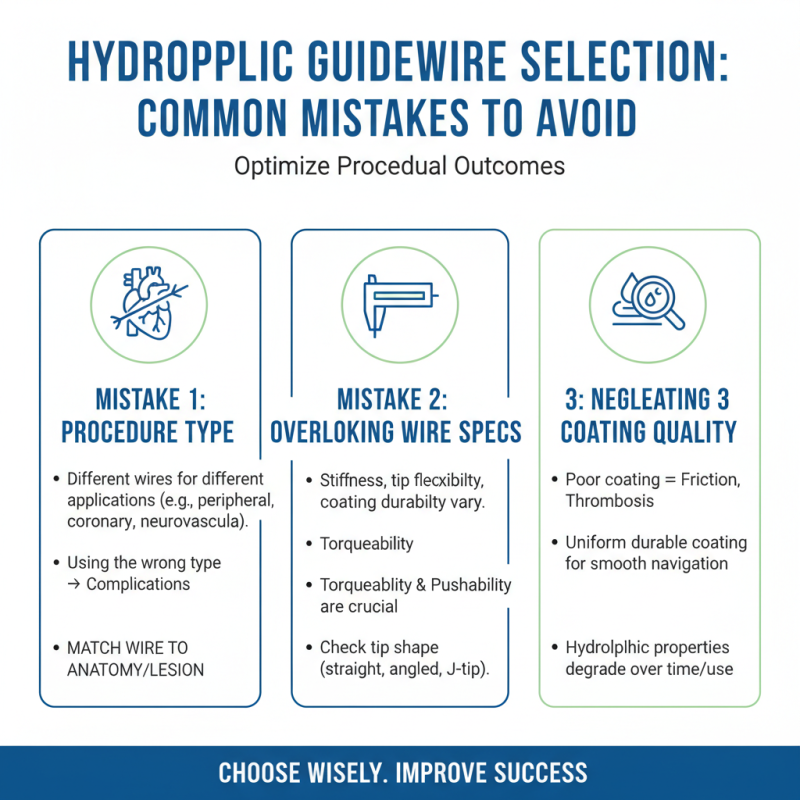
Choosing the right hydrophilic guidewire can significantly impact your procedural outcomes. However, many practitioners fall into common traps during the selection process. One of the most frequent mistakes is not considering the specific characteristics of different procedures. Different guidewires are designed for varied applications, and using the wrong type can lead to complications.
Another error is neglecting the importance of tip flexibility. A guidewire with insufficient flexibility may fail to navigate challenging anatomy. This can lead to procedural delays and increased patient risk. Always assess the specific anatomical challenges you might face during the procedure.
Tips: Focus on the intended use of the guidewire. Is it for crossing a lesion or navigating into a tortuous vessel? Choose accordingly. Additionally, don't overlook the importance of lumen size. A wire that doesn’t fit well might be ineffective, so always verify compatibility with your catheters. Remember, even experienced professionals can misjudge their needs. Always take a step back and evaluate your choice thoroughly.
: Common types include polyurethane, silicone, and polyvinyl chloride. Each type has unique properties affecting performance.
Up to 70% of clinicians believe that the coating type impacts procedural success significantly.
It provides excellent lubricity, reducing friction and ensuring smoother navigation through tight anatomical structures.
No, some coatings may wear off quickly in harsher environments, affecting their effectiveness over time.
Compatibility improves access and reduces complications. A mismatched guidewire may cause procedural challenges.
Check the guidewire’s diameter and tip design for safe navigation and support during procedures.
Not always; some users report tracking difficulties due to friction with certain combinations of guidewires and catheters.
Understand specific procedural needs and review past experiences before selecting a guidewire.
It can lead to frustration and complications during procedures, emphasizing the need for careful evaluations.
Yes, periodic evaluations are necessary as effectiveness may decline after multiple uses.
When selecting a hydrophilic guidewire, it's essential to understand the various applications and key features that can impact performance. Hydrophilic guidewires are designed with special coatings that enhance their ability to navigate through vascular systems, making them invaluable for various medical procedures. It's important to consider the type of hydrophilic coating, as this can influence glide ease, lubricity, and overall handling.
Compatibility with catheters and other devices is crucial for seamless operation, while assessing the appropriate size and length will ensure that the guidewire meets specific procedural requirements. Proper handling and maintenance can significantly extend the lifespan of hydrophilic guidewires, and avoiding common mistakes—such as overlooking compatibility and coating differences—can lead to better clinical outcomes. By evaluating these factors carefully, healthcare professionals can select the right hydrophilic guidewire tailored to their needs.